
Author’s reflections on Death, Immortality, and Reincarnation

Standard

As a predominate part of its background and subtext, the novel “The Judas Pope” explores the past and fanciful future conflict of traditional Western Christianity, with its belief of some form of immortality in Heaven or Hell following final judgement with the ancient Christian Gnostic “heresy” as exemplified by the Cathar (sometimes referred to as Albigensian) creed which (likely) included a belief in reincarnation as a central core of its theology.
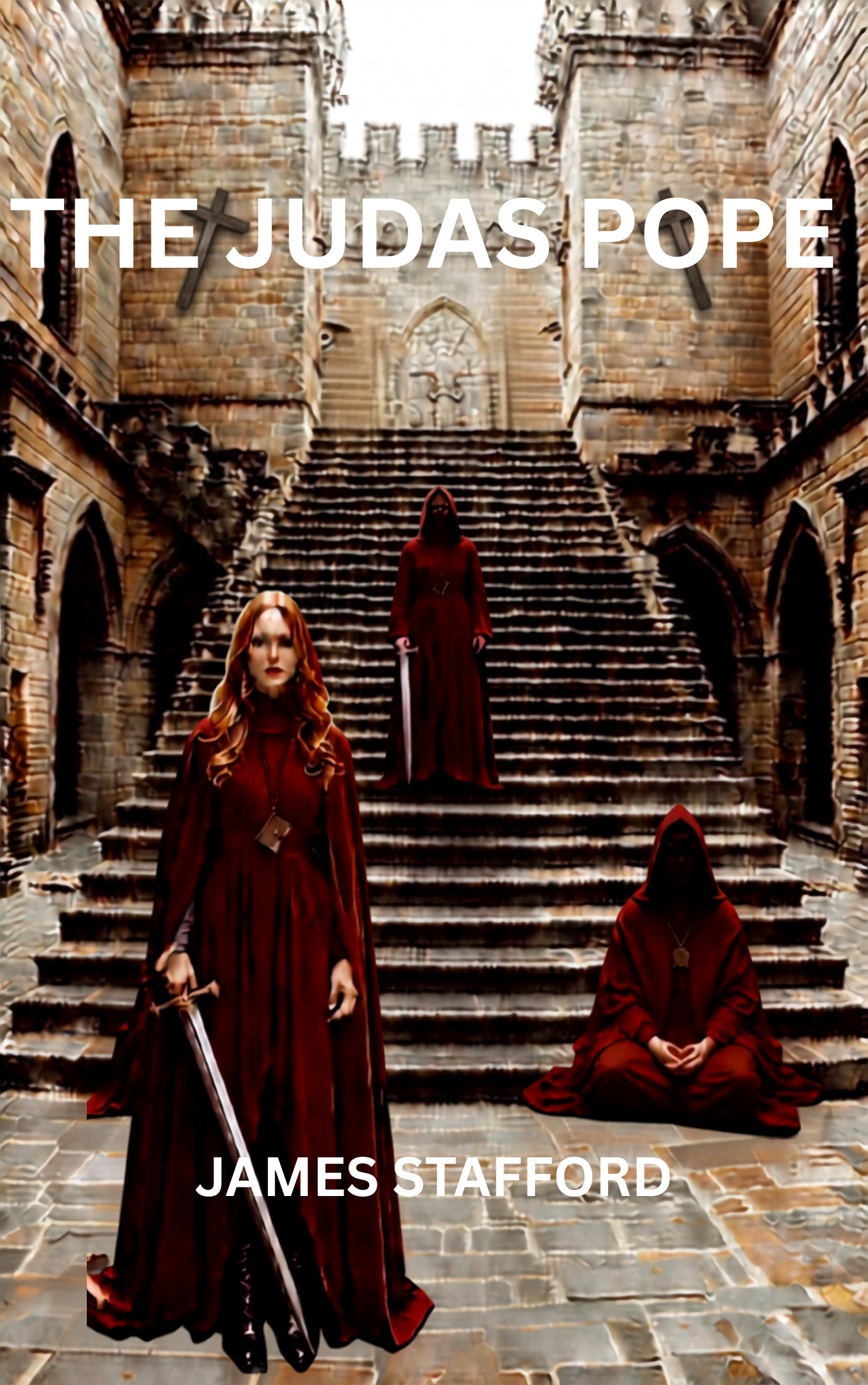
The theory of life after death in all of its permutations is a tantalizingly attractive concept. The certainty of death gives us all reason to pause and to tremble. Especially in Western cultures many attempt to avoid even considering or speaking of it in concrete terms, at least as it applies to us or our loved ones, ignoring or making light of its terrible inevitability until circumstances force us to face its inescapable and brutal reality.

There are disparate ways of considering and dealing with the approach of the “Grim Reaper,” a Western personification of death that says much about our attitudes. Death may be seen as a fearful enemy for those who contemplate the permanent termination of their own consciousness or the passing of loved ones whose presence and company can never be replaced. We have a terror of death only partially mitigated by the knowledge that it is a fate universally shared. This dread of death seems to be widespread although not universal since for some it ultimately may be viewed as a welcome release from unbearable suffering. Indeed, both secular and religious philosophers have speculated that illness, pain, and the infirmity of old age are nature’s (or God’s) way of making the awareness of impending death tolerable.

Many emphasize their faith as a way to mitigate the terror of death, a welcomed refuge from its terrible wrath, accepting what skeptical outsiders may deem as fantastical promises of eternity, heaven, or paradise in return for total submission to one of countless theologies, each convinced that their faith alone reflects the truth. The less religiously inclined may rage against the injustice of death, angry that the world will go on with scarcely a hiccup to delineate their passing. Others assert, with questionable credibility, that they simply accept death as a part of life, not something to be feared but calmly accepted, a component of the eternal cycle.

The conflicting concepts that some form of personal immortality is possible or universal forms the basis of seemingly irreconcilable theologies not only between the major worldwide religions of today but, for the last twelve hundred years or more of the modern era, within various competing branches or sects that called themselves Christian. Death and the promise of life after death in some form preoccupies most religions, with the possible exception of Judaism which seems to deemphasize the entire issue without necessarily rejecting it outright, favoring emphasis on conduct and worship in this life.

Some secular scholars argue that without death there would be no religion and no purpose for it. Religions are too numerous and diverse to easily accept that interesting proposition but certainly it is difficult to conceive of any recognizable form of Christianity without death.

Reincarnation (or rebirth or the transmutation of the soul) is considered by highbrow cynics to be only an absurd fantasy, superstitious nonsense, a delusion caused in part by terror induced by the prospect of inevitable death. It also is the realm of countless charlatans more than willing to suggest personal immortality to the gullible or desperate in exchange for the transfer of wealth, offering a more tangible alternative to more esoteric concepts of life after death. In traditional Western religion, with its seemingly opposing notion of immortality, reincarnation often is seen in even more ignoble terms: at best as foolishness, at worst as a grotesque and dangerous heresy which not only must be rejected but ridiculed and destroyed lest it contaminate, even damn the credulous faithful. Yet, the belief in reincarnation has persisted in much of the world for thousands of years and today is accepted  by hundreds of millions (perhaps billions) of the living as religious dogma and incontrovertible fact.

 The role of reincarnation in the musings of ancient philosophers is ubiquitous and has been widely referenced in literature at least from the time of Plato with his conviction of the constant rebirth of the soul. A few examples of ancient and more recent philosophers:

________________________________

“I am confident that there truly is such a thing as living again, that the living spring from the dead, and that the souls of the dead are in existence.”

Socrates

________________________________

“As a casting off worn garments for new ones, so the dweller in the body enters into ones that are new.”

Epictetus

________________________________

“The doctrine of reincarnation is neither absurd nor useless .  It is not more surprising to be born twice than once.”

Voltaire

________________________________

“A little while, a moment of rest upon the wind, and another woman shall bear me.”

  “The Prophet”  Kahlil Gibran

________________________________

Reincarnation also is manifested in a number of Eastern religions, most prominently Hinduism, Buddhism, Sikhism as well as in the gentle faith of Jainism. It is noteworthy that all in some form see reincarnation and life itself as an undesirable burden, a test only to be escaped through enlightenment, much as the philosophy held by the modern Gnostic Cathars depicted in my new novel “The Judas Pope” (but in “The Judas Pope “ this view is rejected by its offshoot, the perplexing Sisterhood, who see reincarnation as a gift of renewal, essential both for individual growth and the future of human civilization while bestowing unexpected knowledge, powers and challenges and fostering the next step in human evolution).  

A few examples of reflections of reincarnation in Eastern religions:

________________________________

“The spirit is neither born nor does it die at any time…. The spirit is not destroyed when the body is destroyed, Just as a person puts on new garments after discarding the old ones, similarly the living entity or the individual souls acquires new bodies after casting away the old.”

Bhagavad Gita (Ancient Hindu text)

________________________________

 “Long is the cycle of birth and death to the fool who does not know the true path.”

Gautama Buddha

____________________________________

I would be remiss if I failed to mention the Dalai Lama, believed by many of his Buddhist followers to be the 14th reincarnation of the spiritual leader of Tibet and perhaps the 74th in a lineage tracing to the time of Gautama Buddha, the founder of the philosophy (although a Buddhist might demur, explaining the subtle difference between reincarnation of the soul as a Hindu might understand the term and the Buddhist concept of rebirth).

________________________________

From the Sikh religion we have:

“Their coming and goings in reincarnation do not end; through death and birth they are wasting away.”

Sri Guru Granth Sahib Ji  page 4 

________________________________

 Even in the West the concept of reincarnation has a long history. In current times it has been the subject of intense academic study, especially at my alma mater the University of Virginia where the UVA Division of Perceptual Studies (School of Medicine)  for over fifty years conducted interesting if non dispositive studies of the evidence supporting this ancient belief that may suggest at a minimum that reincarnation should be further studied and reconsidered in scientific terms.

Reincarnation is frequently referenced both in prose and poetry (and in modern country/western songs such as  “El Paso City” written and performed by Marty Robbins; this song is one of my favorites for deeply personal reasons If intrigued, you should first listen to Robbins’ hit “El Paso” since “El Paso City: is a direct reaction to it in modern times).

A few literary examples are referring to reincarnation are indicated below:

________________________________

“I know not how, I know not where

But from my own heart’s mystic lore

 I feel that I have breathed the air

 And walked this earth before.”

“Reincarnation” John Lawson Stoddard

________________________________

“So through a glass and darkly

The age long strife I see

Where I fought in many guises

Many names…but always me.”

  Through a Glass Darkly” General George S. Patton, Jr. 

              (1922)

________________________________


“The soul comes from without into the human body as into a temporary abode. ..it then passes into other habitations for it is immortal.”

Ralph Waldo Emerson

________________________________

“As we live through thousands of dreams in our present life so is our present life only one of thousands of such lives which we enter from the other more real life and then return after death.”

Leo Tolstoy

________________________________

“I did not begin when I was born nor when I was conceived. .. Oh, the incalculable times again shall I be born.”

Jack London

________________________________

“I am certain that I have been here as I am now a thousand times before and I hope to return a thousand times (more).”

Goethe

________________________________

“I would sing the pre-existence of human souls

And live once o’er again

By recollection and quick memory

All that has passed since first we all began.”

“The Life of the Soul”  Dr. Henry More

________________________________

There were (are?) many areas of theological dispute between the traditional and the Gnostic branches of Christianity, including, among others, the very identity of the deity who is worthy of worship, whether the Christ of both branches actually rose from the dead or whether he came to be among men only in spirit form and, since a god cannot die, he only seemed to perish and be resurrected as a lesson to humankind, whether Judas Iscariot should be condemned as the great betrayer or honored as the only true confident of Jesus (or Yeshua or Joshua as most Christians until four centuries or so ago and a Gnostic Christian of all eras might have called their Messiah), the location of Hell and the existence or identity of Satan, and the purpose of life itself.

Despite these seemingly diverse areas of theological contentions, it is the certitude of personal death and notions of what happens to the individual spirit, soul, or body following such death, whether it migrates to Heaven or to Hell or to a temporary abode in Purgatory, awaits final judgment, or returns to corporeal existence, that seems to preoccupy adherents of both branches of the faith which forms a key nexus of the dispute. Immortality in Heaven (or in Hell) upon physical death with perhaps a time in purgatory or in the grave awaiting final determination of which location shall be the individual’s final destination is contrasted with reincarnation, repeated rebirth into the material world with the possibility of a future distinctly different joining with the Holy Spirit indefinitely postponed. Perhaps, given the nature of the human species and the importance of this issue both to organized religion and to the individual, it was inevitable that the followers of one branch of Christianity would all but eradicate the other, ending any possibility of fair and open debate. Yet, the polemic endures on some level as it has throughout recorded human history.

Do I accept that there is any validity to the theory of reincarnation, or to any other postulated form of life after death? Ah, but I am the epitome of the unapologetic sceptic, the fervent agnostic always looking for conclusive but ever elusive evidence before I commit to any belief (and usually not then).

Still, as I age my thoughts sometimes wander, my resolve to challenge unproven philosophies shaken by consideration of my own mortality. I ponder: how can something as unique and, at least in my own admittedly biased perception, as wonderful as myself simply vanish, every memory, indeed every thought I have ever had forever erased with the last blink of my suddenly sightless eyes? How can my intelligence be vanquished, my words silenced, my ego obliterated with only my corpse, rotting for a brief while in the ground before it too is consumed or consumed instead in fire with only my ashes remaining, evidencing my passing, and even the memory of my existence fading as all who knew me, whether with love, hate or the more common indifference, meet their own similar dismal fate?

 It is with intense indignation and a profound sadness that I instinctively recoil at the unacceptable thought that my spirit may never again be seen in this universe or in any other. At such times I wonder if theological philosophers, perhaps wiser than I, have had a  glimpse of a truth that somehow has eluded me.

 I ask myself with a touch of irony and probably forlorn hope:

                 What if?

America a “Christian Nation?” Founding Fathers say no! (mock vote) 8-4

Standard

One of my pet peeves is when self proclaimed devout Christians and the politicians who pander to them claim that the U.S. is a Christian nation. They usually do not explain exactly what they mean by this claim or the basis for it. The effect and probably the intent is to exclude anyone who does not consider themselves to be Christian, i.e. agnostics, athiests, pagans, Mormons (well they consider themselves Christians but fundamentalists do not), Buddhists, Jews, Moslems, Hindus etc. from any claim that their beliefs have an equal status (or indeed any status at all) in our Constitutional Republic.

A far better case can be made that one reason our Republic was formed was to limit the power of various churches which purported to be Christian. Before the Revolution various Colonies which later became States had de jure or de facto established churches (Church of England or Anglican in Virginia, Catholic Church in Maryland etc). Indeed, nine of the thirteen colonies had established churches. In Colonial Massachusetts  Catholics, Quakers and Baptists were banned from the colony under penalty of death. Interestingly, one reason for the First Admendment and similar measures adopted in most State constitutions in the eyes of many Christian leaders of the Revolutionary period was not only to stop such abuses and to protect independent religious belief but also to ensure that  participation in government and other secular affairs did not contaminate the true mission and piety of the Church. (This can only make one wonder why many religious leaders of Revolutionary days seem to have been so much wiser than religious leaders of today).

Most disconcerting is the claim that the Founding Fathers were Christians (which presumably is used as evidence that they intended the Republic to be Christian) when the overwhelming evidence is that only John Adams, John Jay, Samuel Adams, Patrick Henry and perhaps Alexander Hamilton and George Mason could fairly be considered to be Christian and several of the Founding Fathers were dismissive or even openly disdainful of Christian belief even though most had some formal connection to the Church of England (later Episcopal Church) or other Protestant Church.

The most important of the Founding Fathers were George Washington, Thomas Jefferson, John Adams, Benjamin Franklin, John Jay, Samuel Adams, Patrick Henry, Alexander Hamilton, James Madison, James Monroe, George Mason and Thomas Paine. Note: Paine is sometimes omitted from the list of Founding Fathers, even though arguably he was the most important and influential of them all, in part because he was not born in an American colony which later became a State (neither was Alexander Hamilton) but mostly because of his vehement atheism and ridicule of Christians.

I have briefly described the evidence of the religious convictions each of these “Founding Fathers”  below and my admittedly presumptuous assessment on their vote on the issue of whether this is a Christian nation. (My judgment is final and no quibling is permitted).

George Washington: the Father of our country, attended church irregularly and rarely if ever for religious reasons. He also rarely if ever referred to Jesus. Prior to the Revolution important legal maters, including deeds to real estate, were maintained and controled in Virginia at the local Church of England facilities with Washington attending to protect his financial, social and other secular interests. When he attended Church services Washington (along with his family) routinely would leave before Holy Communion and was admonished by local ministers on at least four occasions that he was a bad example for others. Typically he never returned to the Church where he was so reprimanded. Washington was a Mason (some theorize that he was the national leader of the Scotish rite of Masons but certainly he was high in the Masonic leadership hierarchy). The Freemasons of his day were known to be opposed to organized Christian churches and indeed membership in the Masonic Orders was prohibited by many Protestant churches as well as by the Catholic Church (under pain of excommunication). Indeed in Washington’s time it was widely assumed that Deism was an integral part of Masonry and even today, despite protestations by Masons that Masonry is not a religion and that followers of all religions who acknowledge a Creator are welcome as members, the suspicion lingers that Deist philosophy forms the core of Masonic belief, practice and purpose at least at the highest leadership levels of the Masonic Orders (others speculate that the Gnostic heresy is the fountain of Freemason principals or perhaps some unique combination of Deist and Gnostic theology). As required to be a Mason, presumably Washington did accept the idea of a Creator and in his writings he typically referred to the deity in Masonic terms as “the Great Architect,” a term also common among Deists. There have been numerous attempts to rewrite history (much as other stories were created about him such as the hatchet and apple tree tale) by portraying Washingon as devout but these attempts, mainly by religious leaders of the 19th century, do not reflect Washington’s own writings and what people believed about him during his lifetime i.e that Washington was a Deist, someone who believes in a Creator who after the Creation plays no further direct role in human affairs but perhaps is observing with some curiosity to see how things turn out.  Deists rejected the concept of devine revelation whether through holy texts (such as the Bible) or through prayer and insisted that human affairs and morality, both public and private, should be governed solely by reason. Today most Deists would be called humanists. His vote: not a Christian nation.

Thomas Jefferson: Clearly Jefferson was either a Deist or an agnostic (during his time these terms often were considered to be all but indistinguishable) with many perhaps incorrectly considering him to be an atheist. Both in his youth and in his retirement years he rewrote the New Testament ( the so called “Jefferson Bible”) to remove all aspects he considered rank supersition, leaving only what he considered to be the true message of Jesus. Accordingly, he removed from his version of the New Testament the Virgin birth, all miracles allegedly performed by Jesus, and the Resurrection as well as any promise of an after life.  Jefferson believed in the moral teachings of Jesus but not in his devinity and therefore was not a Christian as defined by fundamentalists (or indeed as defined by virtually all mainstream Christian religions). The Declaration of Independence which he wrote refers to “Nature and Nature’s God,” a common expression of Deists of his time. Like Washington he was considered to be a Deist by his contemporaries. (Hamilton considered him to be an atheist). Jefferson famously wrote in 1802 that the First Admendment to the Constitution creates “A wall of separation between Religion and  State,” a phrase not original to him but common in the writings of Deists of his time.  He also often noted with approval that the Constitution specificaly states that there can be no religious test for federal office and publically opposed violations of this provision.. Along with Madison he successfully fought to stop state financial support of churches. His vote: not a Christian nation.

Thomas Paine, of course, was the author of “Common Sense,” an all time American best seller first published as a series of political treatises or phamplets which argued the justifications for the American Revolution. John Adams declared that Paine was as important as Washington in the founding of the Republic in that while Washington fought for the Revolution, Paine gave the philosophical rationale for that fight. Paine was a self proclaimed Deist. He also wrote the treatise “The Age of Reason” which criticized Christian belief and practice in stark, even insulting terms. This work also became a best seller in the United States  and while it promoted Deist philosophy, many readers assumed he was an atheist, an assumption he never challenged. He spent most of the later years of his life in France in support of the French Revolution, unable to return to America because of threats made against him because of his total rejection of Christianity and the insults he directed at believers. He finally returned to America and died there largely ostercized by those he had been instrumental in freeing from the yoke of the British Crown . Only five persons attended his funeral  in large measure because of his anti Christian proclaimations. His vehement vote: not a Christian nation

Benjamin Franklin: the original dirty old man, very popular in France (particularly with women) but believed in America to be a member of sex clubs and perhaps even Satanic cults (which were probably synonymous in the minds of contemporary Christians of his day). As evidenced by his own writings he also was a Deist although far less dogmatic about it than men such as Paine and willing to tolerate disparent views. He even moved to bring in a clergyman for a prayer when debate over the Constituion became angry and non productive (his motion was denied).  Franklin was  a close friend of the anti Christian writer Thomas Paine who he helped immigrate to the American Colonies in 1774. Prior to his death Franklin specifically questioned the devinity of Jesus and other basic elements of the Christian faith while praising the message of Jesus in secular terms, much as Jefferson did on many occasions. His vote: not a Christian nation.

Patrick Henry: one of the earliest and, along with Samuel Adams and Thomas Paine, among the most important supporters of Republicanism. Most often remembered for his (alleged) “give me liberty or give me death” speech (historical scholars differ as to whether he actually spoke these words ) he initially opposed the Constitution as giving up to much power to the Federal government and strongly supported the Bill of Rights as a necessary addition to the Constitution. He supported States rights but opposed the concept of nulification of federal laws by states . In his later years he expressed concern that anarchy might overtake the American Republic because of rampant Deism and atheism as he perceived had occurred with the French Revolution. His vote: America is a Christian nation.

John Adams: Adams probably would have described himself as a Christian although clearly he was influenced by Deist philosophy. Whether he would meet the strict definition of Christian of some fundamentalists (requiring rebirth etc) I will leave for others to debate. The very first treaty of the United States, the Treaty of Tripoli, (recall that the Constitution states that the supreme law of the land is the Constitution and Treaties) adopted and apparently supported by Adams since his Administration submitted it to the Senate for ratification and which, in his capacity as President, Adams signed stated that the “Government of the United States is in no way founded on the Christian religion”.* He also strongly supported the Constitutional provision that there could be no religious test for Federal office. (historical note: there are no major statues or memorials to Adams in the nation’s capital despite his extreme importance as a key Founding Father and second President. Many historical scholars believe this is because “Jeffersonians” aka Democratic-Republicans regarded him as a traitor to the Revolution because of the passage and enforcement of the “Alien and Sedition Acts” during his term as President with many Jeffersonians being imprisoned and some dying while incarcerated because of their criticism of his Administration. Recent attempts to rehabilitate his reputation because of his importance to the establishment of the Republic appear to have been largely successful. He and Jefferson reconciled after their retirements although residual bitterness apparently continued with Adams final words , “Jefferson lives,”  illustrating his mistaken belief and considerable dismay that his long time political enemy had survived him. Actually Jefferson predeceased Adams by a matter of hours, both  dying on the same day, ironically on July 4.) His vote: although a Christian himself, based on the “Musselman” treaty and other positions he took during his lifetime, not a Christian nation.

*it should be noted that certain Christian “scholars” argue that this provision was not contained in the Arabic version of the treaty based on a purported copy discovered in the early 20th century but there is no dispute whatever that the English version approved by the Senate and signed by Adams contained this provision so their point is irrelavent and nonsensical as well as in all probability factually in error.

James Madison : the “Father of the Constitution” and primary writer of the Bill of Rights was a Deist. Although educated by Prebsyterian ministers he was an avid reader of Deist papers and arguments. He was heavily influenced by his close friend  Thomas Jefferson.  An examination of his writings after adulthood shows no mention of religion or Christianity whatever. He refused to enter any Church of England sanctuary because of their history of discrimination against other religions (primarily against Baptists). His vote: not a Christian nation.

George Mason: sometimes called the “Co-father of the Constitution”  Probably no one except Madison was more influential in shaping the new Constitution, particularly the Bill of Rights with emphasis on the First Amendment. Although presumably a Christian, there is no evidence that religious belief played any significant role in his life until his final hours. Indeed, his earliest public efforts were directed at containing and reducing the influence of the Anglican Church in Virginia.  He fought against the established Church in Virginia, at one point introducing a bill to the Virginia Assembly which ended the long established policy of forcing dissenters to pay contributions to the established (Anglican) Church, saying in part that  “… religion or the duty owed to our Creator and the manner of discharging it can only be directed by reason and conscience and no particular religious sect or society ought to be favored or established.”  (this statement emphasizing reason reflects a strong Deist influence on his philiosophy  but it cannot be stated with certainty that he was a Deist). He was committed to religious liberty and fought to ensure that no religion would be established by the new Republic. He refused to sign the Constitution in its original form because it did not contain a Bill of Rights prohibiting an established church and safeguarding other individual rights. His vote: not a Christian nation (This view also accords with family traditiion, the writer of this essay being a decendant of his second wife).

Alexander Hamilton: First Secretary of the Treasury and strong Federalist (believing in a strong central government), his religious views as an adult are something of an enigma. The son of a prostitute by some accounts (although during this period any divorced woman was likely to be so labeled), he was clearly devout as a boy. As an adult, in response to what he considered to be the atheism of Jefferson and Monroe (he believed both were “contaminated” with disbelief while consorting with revolutionaries in France), he proposed chaplins for each regiment during the Revolution. His wife was devout and rented a pew at their Church for many years and he frequently attended services with her. Hamilton in his later years clearly believed in some form of after life but always spoke of Heaven and Devine Providence, never of Jesus or God. In a loose definition of Christian he probably would qualify but it is doubtful he would meet the strict definition of a fundamentalist. His vote: a somewhat uncertain yes. He probably would be supportive of the idea of the Republic as a Christian nation if not in fact at least as being desirable. (He certainly would vote yes if his wife would learn of his vote but I am presuming a secret ballot).

John Jay: President of the Continental Congress and first Chief Justice of the Supreme Court, Jay is probably the only one of the major founding fathers who would agree with the Christian fundamentalists of today. He was a devout Christian who believed that good government was based on a belief in and submission to God. He opposed allowing Roman Catholics to hold political office so we may presume his definition of Christian was limited to the main line Protestant faiths. His vote: vehemently yes, a Christian nation.

Samuel Adams, a cousin of John Adams, was called by Jefferson “the Father of the Revolution.”  He also was sometimes called the last Puritan and was a participating member of the Congregationalist Church as an adult. A true rabble rouser and revolutionary (and a primary instigator of the original tea party) he despised the British Crown and royalty in general and urged the creation of a Republic long before such radical ideas had any popular support. He also supported the concept of God as the source of human rights. He would doubtlessly endorse the idea of America being a Christian nation. However, like John Jay, this belief would not extend to Catholics who he also despised and considered a threat to the very idea of liberty and to the survivial of the fledging Republic.

James Monroe: The fifth President of the U.S. and last of the Founding Fathers to become President was a Deist. His mentor and friend was Thomas Jefferson. Although formally a member of the Church of England (later Episcopal Church), there are no written records or letters  whatever either by Monroe  or his friends concerning his religion and he apparantly never took Communion. He studied law at the College of William & Mary, a hotbed of Deist thought and activity (disclosure: the author of this essay also attended the law school at the College of William & Mary but, despite the suggestions of his children, was not a contemporary of Monroe). When his infant son died he wrote an emotional letter related to the death but with no mention whatever of religion. Although Hamilton was convinced that he was an atheist corrupted to such non-belief by the influence of Jefferson and the French Revolution, one statement Monroe made could be interpreted as suggesting he believed in an interactive God; however, clearly religion played no role whatever in his life. He was a close friend of Thomas Paine and indeed Paine resided in his household (and borrowed a Bible from him as source material) while he wrote the inflamatory anti Christian treatise “The Age of Reason.” (There is some evidence, however, that Monroe was either antisemetic or at least willing to discriminate against Jews in certain situations. While Secretary of State, he dismissed Mordacai Noah  as counsel to Tunis because he was a Jew.   Jefferson, Adams and Madison wrote letters to him protesting this dismissal on the grounds it violated the Constitutional separation of Church and State and the specific Constitutional provisions prohibitting a religious test for federal office).(historical note:like Jefferson and John Adams, Monroe also died on July 4). His vote: not a Christian nation.

Final tally of votes:

Eight of the Founding Fathers “vote” that America is not a Christian Nation

Four of Founding Fathers “vote” yes, it is a Christian nation


I believe what I believe. Don’t confuse me with the facts

Standard

Yale law professor Dan Kahan’s research paper “Motivated Numeracy and Enlightened Self-Government” is worthy of our consideration. It is an ambitious attempt to scientifically explain why reason and facts rarely prevail in  political debate.  His paper  has been expressed by one science writer in laymen’s terms as “Science confirms politics wrecks your abiltiy to do math.”

The issue posed by Professor Kahan is why do societal conflicts persist in the face of compelling scientific evidence which seemingly should resolve such conflicts? Based on his experiments, the impact of political dogma dramatically affects the ability to think clearly, undermining basic reasoning skills (I would suggest that this also applies to any dogmatic or strongly held belief; e.g those of a religious nature). The professor’s experiments indicate that people who are normally very good at math totally fail to correctly answer a problem that they would otherwise be able to solve easily if giving the correct answer goes against their political (religious?) beliefs.

Do facts matter? Apparently not. The results of this study indicate that when someone is misinformed, giving them more facts only ensures that they will cling to their preconceived beliefs even more tenaciously.

This suggests why political (and religious) debates are generally pointless and why some will deny global warming (climate change) and evolution no matter what facts are presented for their consideration. This study explains why they continue to do so no matter what evidence is presented to them. They would rather drown as the oceans rise and be perceived as  superstitious shaamans rather than adjust their belief system to accommodate overwhelming evidence.

Based on this study and perceptive observation, humans may be more accurately described as  beings who rationalize preconceived beliefs rather than beings who truely reason. The miracle? That our species has advanced as far as it has despite widespread irrationality.